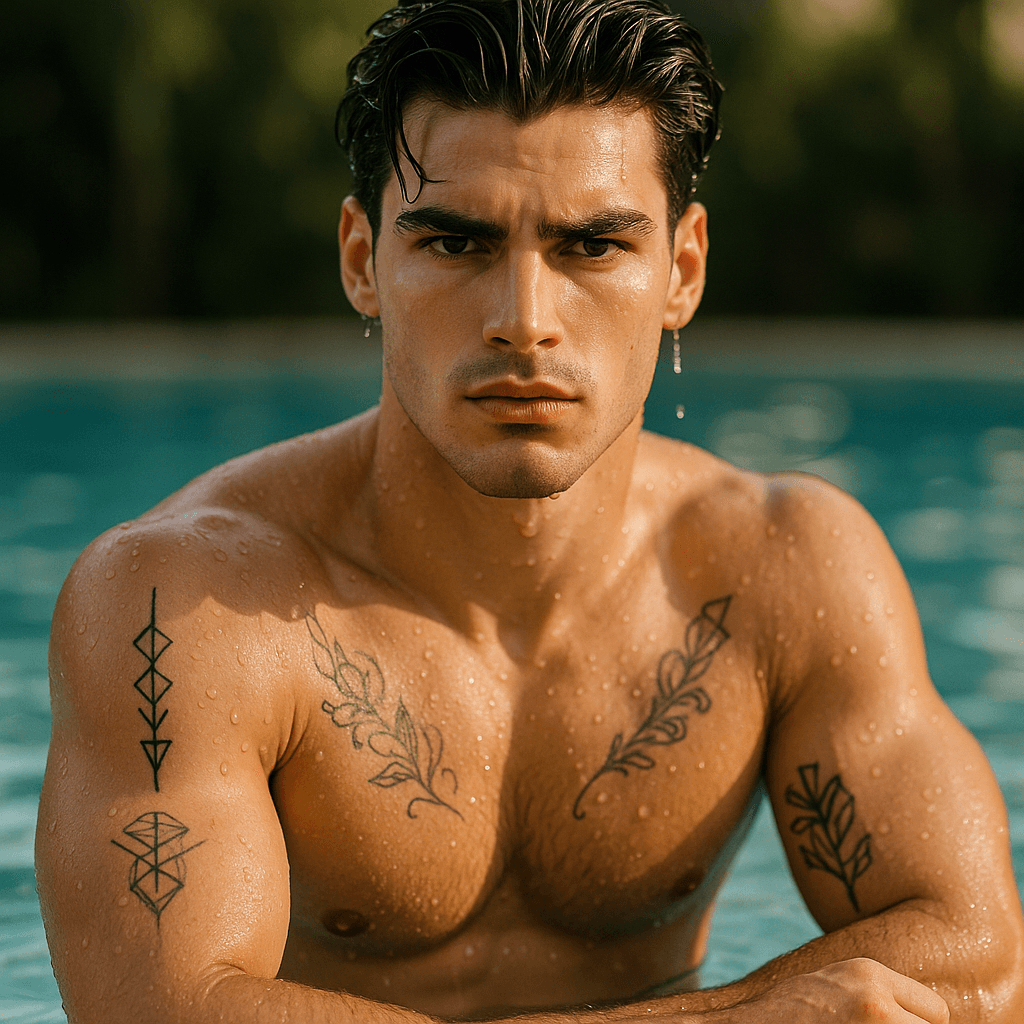
If you've seen "morally grey MMC" or "I need an FMC with a spine" and nodded along without fully knowing the words, here's the decoder: the MMC meaning in books is male main character, FMC is female main character, and the rest of the alphabet soup - TBR, DNF, HEA - is the working vocabulary of BookTok. This is the whole dictionary in one place, plus the part nobody explains: why romance readers started talking in acronyms at all.
What does MMC mean in books?
MMC stands for male main character - the male lead of the story, and in romance, usually the love interest the entire plot orbits. When readers say "the MMC ruined me," they mean the fictional man did his job. The term almost always arrives with a modifier attached, because the modifier is the actual information: a morally grey MMC, a grumpy MMC, an MMC who yearns. The noun says male lead; the adjective tells you which flavor of ruin you're signing up for.
What does FMC mean in books?
FMC stands for female main character - the heroine, the point-of-view you usually ride through a romance. FMC discourse is its own BookTok genre: readers want an FMC "with a spine," argue over whether an FMC is relatable or insufferable, and will DNF a book over her decisions faster than over the plot. If the MMC is the fantasy, the FMC is the avatar - which is why opinions about her run so hot.
MMC vs MC vs "love interest" - what's the difference?
MC just means main character, gender unspecified - it's the umbrella term, and the one you'll see outside romance. MMC and FMC are romance-specific precision tools: in a genre where the central couple is the plot, readers need to talk about each half of it without ambiguity. The older vocabulary - hero, heroine, love interest - still exists in publishing copy, but BookTok mostly dropped it. "Hero" describes a role in the story; "MMC" describes a slot in the pairing, which is the thing romance readers actually compare, rank, and argue about.
The types of MMCs: a field guide
Saying you want "an MMC" is like ordering "food." The archetype is the order, and every archetype has a name:
- Morally grey - dangerous to everyone but her
- Shadow daddy - the brooding, shadow-wielding fantasy version
- Golden retriever - sunshine, loyalty, zero games
- Himbo - huge, kind, gloriously uncomplicated
- Tsundere - hostile shell, melted center (the anime loanword)
- Yandere - devotion tipped past the line into obsession
- Book boyfriend - what any of the above becomes when a reader claims him
That list is also a map of romance tropes - on BookTok, character type and trope are nearly the same currency.
What does TBR mean?
TBR is your "to be read" pile - the books you own, or have saved, and fully intend to get to. Its defining property is that it only grows. A reader with a 200-book TBR buying three more at the bookstore is not a contradiction; it's the culture working as intended.
What do DNF, HEA, and HFN mean?
- DNF - "did not finish." Used as a verb: I DNF'd it at 40%. On BookTok it's less an admission than a review.
- HEA - "happily ever after," the promised ending that makes a romance a romance by most genre definitions.
- HFN - "happy for now," the HEA's realistic cousin: together, happy, no wedding epilogue promised.
- Honorable mentions: LI (love interest), dual POV (both leads narrate - prized because you get the MMC's head), Y/N ("your name" - fanfic's fill-in-the-blank protagonist), and smut (which has its own whole dictionary of spice levels).
Why does BookTok talk in acronyms?
Because the abbreviations are compression for a community that runs on pattern-matching. BookTok turned romance discovery into a trope economy - readers don't browse "romance," they request "grumpy MMC, forced proximity, HEA required" and any fluent speaker knows exactly what shelf that is. The acronyms started in fanfiction tagging culture, jumped to TikTok captions where character count is precious, and stuck because they work like search filters. (Our own search data study found readers still google subgenres more than tropes - but inside the community, the acronym is the language.)
When you know exactly which MMC you want
Fluency has a side effect: once you can name your type that precisely, the bookstore lottery starts feeling slow. Swoony skips the search - a catalog of MMCs sorted by exactly this vocabulary, in a closed-door, romance-only chat where the bond deepens across five stages and is never paywalled, no subscription and no per-message tolls. If your order is "golden-retriever energy, summer setting," meet the trouble at the pool. If it's "quiet, weathered, keeps you," there's the man the island kept.
You know the words now. Go say them to someone who answers.